AN INVITATION / FAITH · HUMILITY · THE HUMAN CONDITION

Humanity
Through Grace

What if your worth was never something you had to earn?

We spend so much of life trying to be enough. Good enough. Successful enough. Right enough. Loved enough.

Christianity begins with a different possibility: that our deepest worth is received before it is achieved. It calls that gift grace.

Follow the story
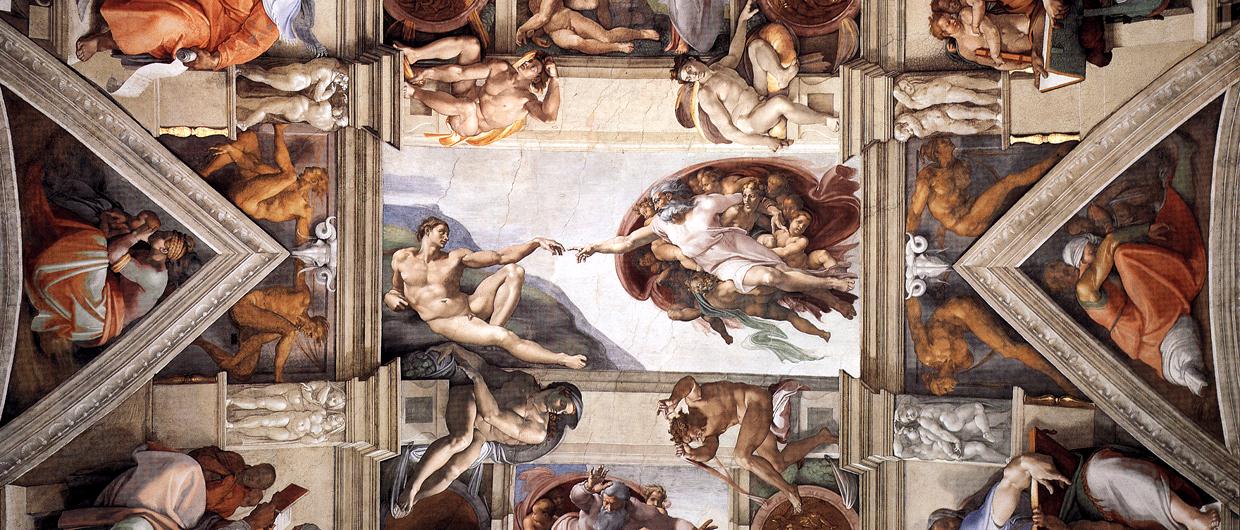
Detail of two hands reaching toward one another in Michelangelo’s Creation of Adam
MICHELANGELO · THE CREATION OF ADAM · c. 1511
01 / THE HUMAN STARTING POINT

Most of us are keeping score.

We compare ourselves with strangers. We replay an awkward conversation. We want our efforts to be noticed. We can feel proud of a success in the morning and not good enough by evening.

There is nothing strange about wanting to matter. But when our worth depends entirely on winning, being admired or always being right, life can become exhausting.

So what happens when we stop treating ourselves — and other people — like scores to be earned?

02 / A DIFFERENT BEGINNING

THE CHRISTIAN IDEA OF GRACE

A gift before
the achievement.

In Christian language, grace is God giving what cannot simply be bought, deserved or controlled. It is more than a compliment or a nice feeling. It is the claim that God's generosity comes before our best performance.

That does not make effort, responsibility or change unimportant. It changes where we begin: not with proving that we are worthy of care, but with learning how to respond to a gift.

AN IDEA TO CARRY FORWARD

What might change if you did not have to win your right to matter?

03 / WHAT WE NOTICE

GRATITUDE

Not everything good was owed to us.

Sometimes gratitude begins with something ordinary: a person who stayed, a chance we did not create, an unexpectedly quiet morning.

It is not pretending that pain is good. Nor is it a command to feel grateful for harm. It is a way of noticing that even in an imperfect life, some things arrive as gifts.

And when we stop taking every good thing for granted, we may find ourselves a little less desperate to be the centre of everything.

What does research suggest? +

A 2025 meta-analysis of gratitude interventions found small average improvements in wellbeing, with considerable variation across settings. This does not prove Christianity or mean gratitude can replace support for serious distress.

Read the research ↗
04 / A MORE HONEST SELF

CHRISTIAN HUMILITY

You do not have to make yourself small.

Humility is often mistaken for talking yourself down. But you can recognise your abilities without believing you are superior. You can admit you were wrong without becoming worthless. You can listen without handing someone else your conscience.

Healthy humility makes room for truth — about our strengths, our limits and other people's equal worth.

Humility makes truth larger than the ego.
It does not make another person’s ego larger than you.

That distinction matters, because beautiful ideas can be used for ugly purposes.

Explore what Christian humility really means ↗
05 / WHEN LANGUAGE BECOMES POWER

EGO, CONTROL & SPIRITUAL ABUSE

But humility can be counterfeited.

Words that should invite growth can also become a way to control someone.

“Be humble.”“Forgive me.”“Submit.”“God told me.”

These words are not automatically harmful. In a healthy community, they may be spoken sincerely. The problem begins when they are used to silence questions, excuse cruelty or put a leader above accountability.

Sometimes people with entitled or grandiose traits are drawn to admiration and control. But a label cannot tell us everything about a person — and narcissistic traits are not a clinical diagnosis.

Before asking what someone is, look at what their behaviour does.

Four questions worth asking

  • Can I disagree without being shamed?
  • Can this person admit they were wrong?
  • Do the same rules apply to everyone?
  • Can I set boundaries or leave safely?

Humility before God should never mean surrendering your safety or judgement to another human being.

Understand spiritual abuse and unhealthy control ↗
06 / WE NEED ONE ANOTHER

COMMUNITY & RELATIONSHIPS

No one becomes human alone.

We are shaped by people: the ones who make us feel safe, those who challenge us honestly, and those who stay when life stops looking impressive.

Belonging is not the same as fitting in at any price. Good relationships leave room for questions, difference and growth.

And because we need one another, we also have the power to hurt one another.

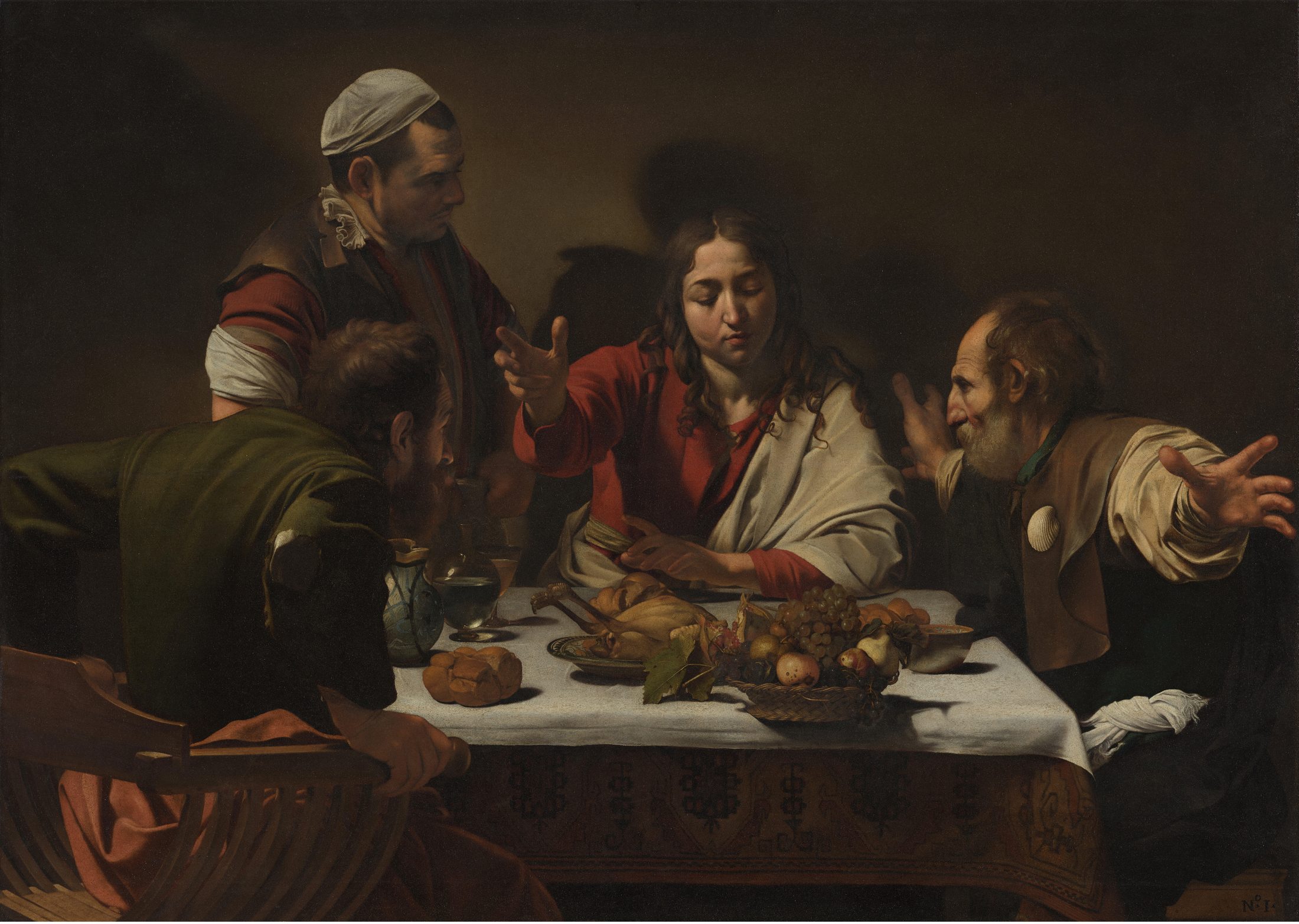
Caravaggio’s Supper at Emmaus, showing people gathered around a shared table
CARAVAGGIO · SUPPER AT EMMAUS · 1601
07 / WHEN PEOPLE HURT US

HURT, FORGIVENESS & BOUNDARIES

Letting go does not mean letting someone back in.

Forgiveness is one of Christianity's hardest invitations. It asks what we do with anger, pain and the desire to make someone pay.

But forgiveness is not pretending nothing happened. It is not the same as trust. It does not require reconciliation, the removal of consequences or staying somewhere unsafe.

Sometimes the truthful next step is distance, protection, support or justice.

Grace can invite a different future without denying what happened in the past.

What does research suggest? +

Meta-analyses of structured forgiveness interventions report improvements in some mental-health outcomes. Those interventions are not evidence that every person must forgive on demand or reconcile with someone who harmed them.

Review the evidence ↗
08 / WHEN LIFE DOESN’T MAKE SENSE

And still, life can break our hearts.

People we love die. Plans collapse. Prayers go unanswered. Sometimes there is no lesson waiting neatly on the other side of what happened.

Christianity has a language for this too: lament. Grief, protest and questions are found inside its own scriptures. Faith does not have to mean smiling through suffering or calling harm a blessing.

When certainty runs out, perhaps the honest response is not another answer. Perhaps it is attention.

09 / BEYOND OURSELVES

PRAYER, BEAUTY & AWE

There are moments when the world feels bigger than us.

A night sky. A piece of music. A quiet act of kindness. A prayer without a clear answer.

Psychology can study experiences of wonder and attention. Christianity can interpret some of them through worship and prayer. Those are different kinds of claims — and they need not be confused.

Prayer is not a guaranteed way to feel better. Wonder is not proof that God exists. But both can make space for a question our busy lives rarely ask: What deserves our attention?

What does research suggest? +

Evidence for contemplative practices is mixed. In a large randomised study, a Christian centring-prayer condition did not outperform comparison conditions on the main wellbeing outcome. That null finding belongs in an honest account of the research.

See the trial ↗
10 / WHAT WE DO WITH THE GIFT

COMPASSION & MEANING

A life is not only something to achieve.

We still have to earn a living, pay bills, learn from mistakes and make choices. None of that disappears.

But perhaps the measure of a life is not only what we gather. Perhaps it is also what we give: attention, courage, honesty, a helping hand, time we will never get back.

Research suggests that a sense of purpose often travels with better health and wellbeing. Yet even a strong purpose can be destructive if it serves only ego or domination.

So the deeper question is not simply whether we have a purpose. It is what deserves a life.

Explore meaning and human flourishing ↗
11 / WHAT MAKES A GOOD LIFE?

LIVING WELL

A good life is bigger than feeling good.

We can be happy and still behave selfishly. We can be grieving and still live with love, dignity and courage.

Philosophers have argued for centuries about what it means to flourish. Psychologists study different parts of wellbeing. Christianity asks another question: what becomes possible when our worth is not a prize we must win?

No single study can settle that question. No single thinker owns it.

Meet the thinkers — and their disagreements ↗
12 / BACK TO THE BEGINNING
Humanity Through Grace emblem

THE STORY COMES FULL CIRCLE

We began by asking whether we were enough.

We have met gratitude and pride, love and hurt, the misuse of power, suffering, wonder and purpose. None of these fits into a perfect answer.

Christianity speaks of grace not as the end of the human story, but as a different way to stand inside it.

Perhaps grace does not remove the human struggle.
Perhaps it changes the ground on which we meet it.

You do not have to leave convinced.
Only more awake to the question.

CONTINUE THE CONVERSATION

THE IDEAS BEHIND THE STORY

The story is the beginning.
The evidence is here.

There is more to ask than one page can hold. These essays take the difficult parts seriously, explain their terms and show where the evidence is strong, limited or contested.

How we work

Faith makes theological claims. Psychology studies human experiences. Philosophy asks whether arguments hold up. We do not use science as proof of God, or spiritual language to excuse harm. When research is mixed, we say so.